PhD-position: Omega-3 production and transfer in upwelling systems
- On-site
- 't Horntje, Texel, Noord-Holland, Netherlands
- Coastal Systems (COS)
Job description
The Department of Coastal Systems (principal investigator dr. Eleonora Puccinelli) at the Royal Netherlands Institute of Sea Research (NIOZ) is looking for a highly motivated PhD student to join our research on omega-3 in plankton communities in upwelling systems. This PhD is funded under the Vidi grant of Eleonora Puccinelli “Upwelling systems as hotspots of omega-3 in the ocean: production, transfer and food quality”. The student while employed and based at NIOZ-Texel, will be registered at the University of Utrecht.
THE INSTITUTE
NWO-NIOZ Royal Netherlands Institute for Sea Research is the Dutch national oceanographic institute and principally performs academically excellent multidisciplinary, fundamental, and frontier applied marine research addressing important scientific and societal questions pertinent to the functioning of the ocean and seas. NIOZ includes the National Marine research Facilities (NMF) department that operates a fleet of research vessels and the national pool of large seagoing equipment, and supports excellence in multidisciplinary marine research, education, and policy development.
THE DEPARTMENT
The COS department is one of the four research departments of NIOZ. COS integrates state-of-the art laboratory, field, and modelling studies in the dynamics of marine species and food webs. COS examines how physical, chemical, and biological processes interact to determine the distribution, composition, and productivity of marine species across the food web, in marine habitats from the coast to pelagic environments.
THE PROJECT
Upwelling systems are the most productive regions in the ocean, supporting fisheries that provide food for human consumption that is especially high in omega-3 content. Omega-3 are vital fatty acids produced by phytoplankton—tiny organisms at the base of the marine food-web—that are essential for all animals’ health, yet for most species impossible to produce. The amount of omega-3 that reaches higher trophic levels, depends on how efficiently omega-3 are transferred through the food chain. Upwelling events bring nutrient rich deep-water to the surface, promoting phytoplankton production through communities dominated by known producers of omega-3. As such, these areas could represent hot-spots of omega-3 production. Seawater temperature, the frequency and intensity of upwelling events, and nutrient availability influence phytoplankton productivity and could thus affect omega-3 production and transfer efficiency to consumers.
YOUR ROLE
This PhD focuses on estimating omega-3 production rates and transfer efficiency from phytoplankton to zooplankton in upwelling systems. To achieve this goal, the student will combine state-of-the-art techniques and novel approaches to both field, experimental and laboratory studies, from research cruises and onboard experiments, focusing on phytoplankton and zooplankton communities in the Benguela and Canary upwelling systems, two of the world most productive upwelling systems. The student will take part in three 1-months research cruises in the study regions, where the samples for the PhD will be collected and where a range of experiments will be performed to investigate omega-3 production and transfer efficiency rates and how they are affected by environmental change (e.g., temperature, nutrient availability). Samples will then be analyzed at NIOZ for several analyses including stable isotope, fatty acid and flow cytometry.
You will present the data from the field and experiments within the departments, and at (international) scientific conferences. You will prepare scientific articles and publish your results in international scientific journals. Lastly, you aim to complete the PhD thesis within the official appointment duration of four years.
You will be supervised by a team of scientists from the NIOZ and the University of Utrecht. Training and courses during the PhD trajectory will be offered by NIOZ, and via the Utrecht Graduate School of Life Sciences.
Job requirements
THE CANDIDATE
We seek an enthusiastic and ambitious candidate who has an energetic and collaborative personality. You have a keen interest in marine phytoplankton and zooplankton ecology and are eager to perform field work on research for several consecutive days.
You have:
A Master’s degree in marine ecology/biology, biochemistry, biogeochemistry, or a closely related discipline
Affinity and preferably experience with plankton ecology in the field and/or in the lab
A demonstrated ability to work on programming software such us R, Phyton or Matlab
Strong communication and writing skills in English
You are a team player and well organized, but also able to work independently
Willingness to spend consecutive days at sea
Driving license B
We do not expect that candidates master all techniques from the start, but consider previous experience with one of more of the following techniques as an advantage: lipid, fatty acid and/or stable isotope analyses, flow cytometry, bioassays, and culturing zooplankton
NIOZ wants to be a transparent institute with a healthy working climate and an inclusive culture, where people from diverse backgrounds and gender bring their talents and further develop these talents. We aim for inclusive decision-making processes and expect our leadership to show visible commitment, awareness of bias, and cultural intelligence.
THE CONDITIONS
Employment of this full-time position at Royal NIOZ is by NWO-I, for a total duration of 4 years. You start with an appointment for the duration of 1 year, that, after a positive evaluation in the 9th month (Go-No go), will be extended to the full period of 4 years.
Salary compliant with scales for PhD candidate (OIOs) CAO-WVOI (Collective Labour Agreement for Dutch Research Institutes)
An appointment at NIOZ as a PhD candidate means working and learning simultaneously conform the NIOZ PhD policy.
338 annualized holiday hours for a full-time 40-hour work week.
Pension scheme via ABP, 8% holiday allowance and a year-end bonus of 8.33%.
2nd class public transportation travel is reimbursed 100%.
Employment benefits plan to exchange a portion of your salary for days off or vice versa, or can be used to purchase a bicycle with tax benefits.
We offer relocation expenses for employees coming from abroad and support with finding accommodation.
You will be registered at the University of Utrecht for your PhD thesis defense.
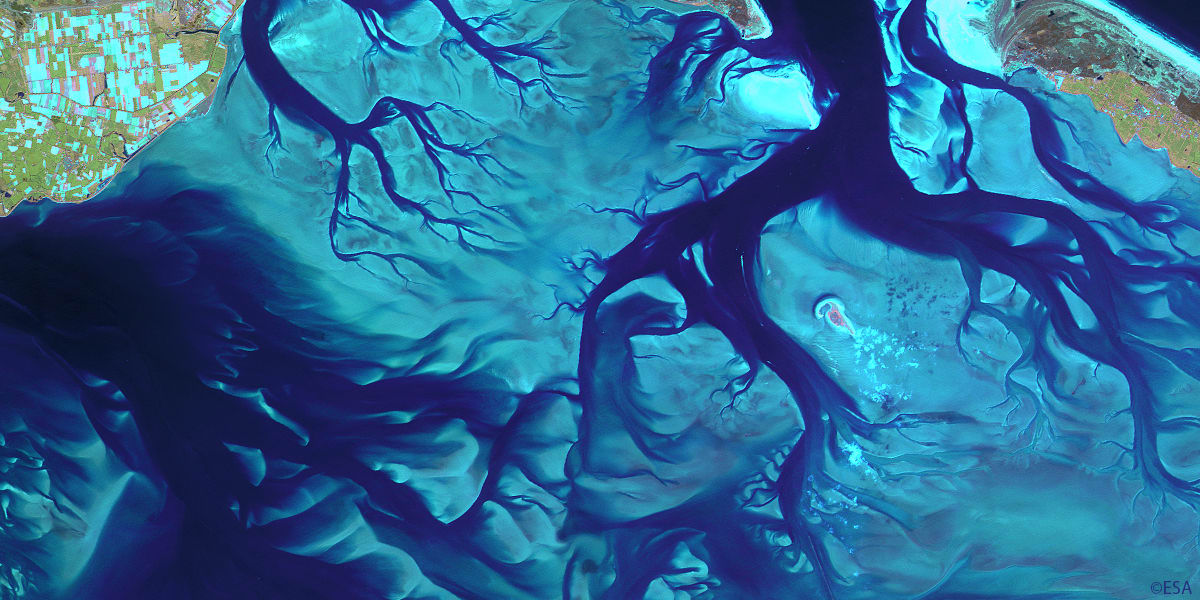
The COS department of NIOZ is located on the beautiful island of Texel in the World Heritage Wadden Sea. Texel offers sun, wind and beach, and a diverse but moderate level of facilities, including a thriving tourist industry, shops, sports facilities, primary schools and a high school. It is connected to the mainland by a 20-min ferry operating every hour to half-hour. The NIOZ is situated next to the ferry terminal.
TO APPLY
If you are interested in this opportunity, please submit a letter of motivation, your CV, a master thesis (or a written report of research performed during your master’s degree), and names and contact information of at least two references. The cover letter should include your motivation for this PhD position and how you meet some of or all the preferred criteria. To apply, please send your application via the ‘apply’ button.
MORE INFORMATION
For additional information about this vacancy, please contact Dr. Eleonora Puccinelli (eleonora.puccinelli@nioz.nl). For additional information about the procedure, please send an e-mail to working@nioz.nl.
Closing date for applications: January 31st 2026. Online pre-interviews are foreseen for February 13th 2026, and selected candidates will be invited for a preferably in-person interview at NIOZ on Texel on March 2nd 2026. We aim to start the position by 1st June 2026 or shortly after.
or
All done!
Your application has been successfully submitted!